Religion and Foreign Policy Webinar: Pope Leo XIV’s First 100 Days
Event date
Speakers
- Thomas J. ReeseSenior Analyst, Religion News Service
- Stephen SchneckCommissioner, U.S. Commission on International Religious Freedom
- George WeigelSenior Fellow, Ethics and Public Policy Center
Presider
- Claire GiangravéReporter, Religion News Service
Introductory Remarks
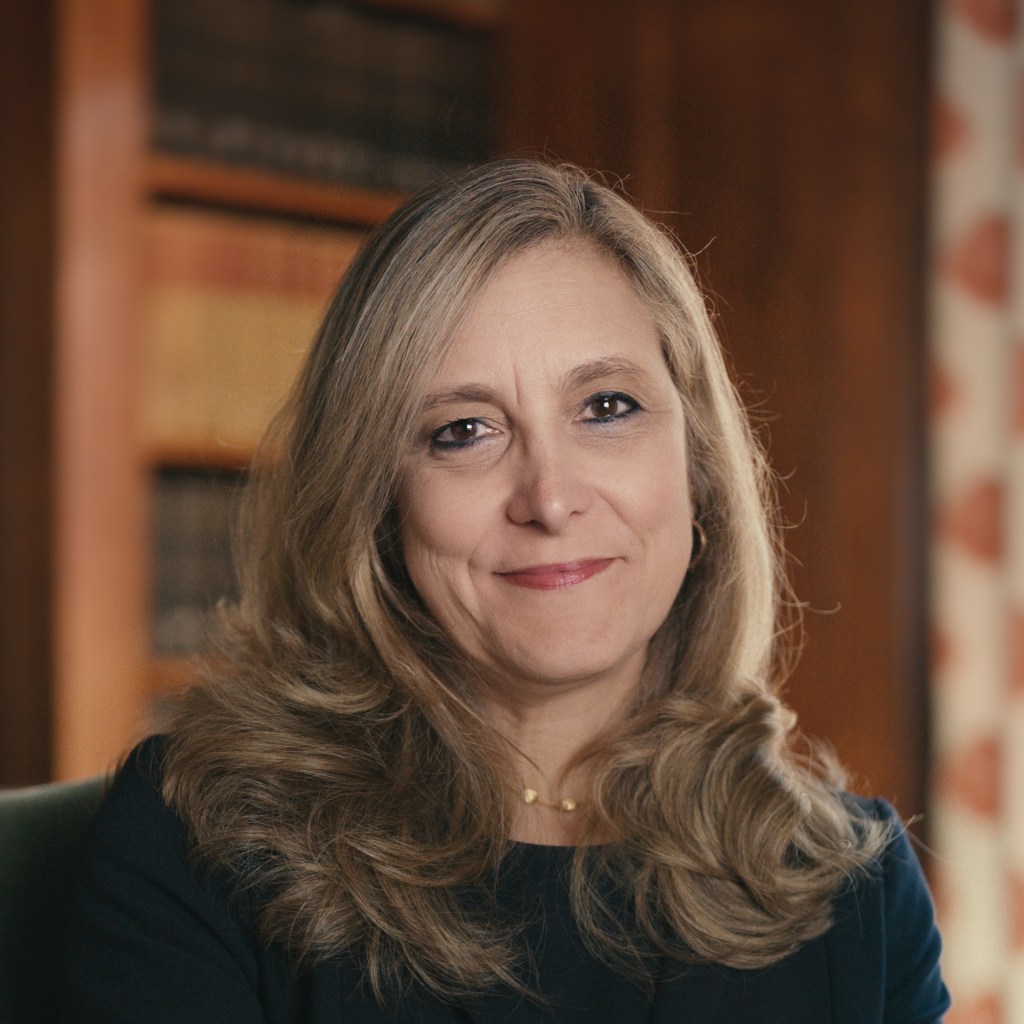
![]() Irina A. FaskianosVice President for National Program and Outreach, Council on Foreign Relations
Irina A. FaskianosVice President for National Program and Outreach, Council on Foreign Relations
From RFP Calls.
FASKIANOS: Thank you. Welcome to the Council on Foreign Relations Religion and Foreign Policy Webinar Series. I’m Irina Faskianos, vice president of the National Program and Outreach here at CFR. As a reminder, the webinar is on the record and the video and transcript will be available on CFR’s website, CFR.org. As always, CFR takes no institutional positions on matters of policy.
We’re delighted to have this panel discussion on Pope Leo’s foreign policy priorities during his first hundred days and the Vatican’s evolving role in international diplomacy. The moderator of today’s discussion is Claire Giangravè. Ms. Giangravè is a Rome-based reporter for Religion News Service (RNS), covering the Catholic Church and the Vatican. Before joining RNS in 2019, Ms. Giangrave was at Crux Catholic Media as a faith and culture correspondent. She has also previously worked at CNBC/Class Editori, ForexInfo, PBS, and MSNBC News. And she holds a bachelor’s degree from Roma Tre University and a master’s degree in journalism from Boston University.
I’m going to turn it over to her to introduce our distinguished panel. And she will have a conversation with our group for about twenty-five minutes and then we’ll go to you for all your questions, both written and verbal. And we look forward to this discussion. So, Claire, over to you.
GIANGRAVE: Thank you so much, Irina. I’m really honored to be here. And we have an amazing and distinguished lineup of guests for our conversation today, as you said, to discuss the first 100 days—we’re giving the presidential treatment to Pope Leo XIV—since he’s, you know, come to the head—to head the Catholic Church and the Vatican.
I would like to start by introducing Dr. Stephen Schneck. He is a commissioner on the United States Commission on International Religious Freedom, appointed by President Biden. He previously served as director of the Institute for Policy Research and Catholic Studies at the Catholic University of America, where he taught political philosophy for more than thirty years including terms of as a professor, a department chair, and dean. He serves on the governing boards of the Catholic Climate Covenant, which advocates for environmental justice, and the Catholic Mobilizing Network, a Catholic organization working to end the death penalty and promote restorative justice. His career has focused on the intersection of faith, politics, and diplomacy. Thank you so much for being with us, Stephen.
And I’m also really pleased to introduce a good friend of mine and colleague Father Tom Reese, a Jesuit priest, a veteran journalist, and a respected voice in matters of faith, policy, and global affairs. Father Reese is a senior analyst at Religion News Service and a former chair of the U.S. Commission on International Religious Freedom, where he advances religious liberty and interfaith dialogue worldwide. He has also served as editor-in-chief of America Magazine and remains an influential commentator on church and society. It’s great to have you here, Tom.
And, finally, it is a privilege to introduce George Weigel, who I’ve known for many, many years, a distinguished senior fellow at the Ethics and Public Policy Center in Washington, D.C. and an author of more than thirty books, including the acclaimed Witness to Hope, the biography of Pope John Paul II—the biography. (Laughs.) His work has explored the church’s engagement with modernity, religious freedom, and international affairs, shaped in part by his close collaboration with St. John Paul II and also his ongoing dialogue with Catholic leaders around the world. It’s a real pleasure to have you all here and I can’t wait to start a conversation.
And I’d like to go back to those first moments when the white smoke emerged from the Sistine Chapel. And George and Tom, I know you were there at the Vatican, as I was. And we all learned, with a little bit of shock, that the pope was born in—was born in the United States. And so I guess my first question for all of you is really, how do you think that this pope—born in the United States, and I know he has a Peruvian background that I’d love for you to explore as well—has shaped his papacy and his understanding of Vatican diplomacy so far? Maybe we could start with Stephen here.
SCHNECK: Well, thanks, Claire. Let me say at the outset, I’m speaking in my private capacity and not in my current capacity as a commissioner with the United States Commission on International Religious Freedom.
I do think, in fact, his American experience on the south side of Chicago has done much to shape Pope Leo’s approach to the papacy. I think there’s a style about him that’s recognizably American, a way of relating to people, I think, that speaks to the best traditions of American personalities, you know, throughout our history. There’s an openness about him. And I think all of that is very reflective of his upbringing in the south side of Chicago.
GIANGRAVE: Absolutely. I mean, we hear him talking in English, in a Chicago accent. I mean, that’s—
SCHNECK: It’s a shock, isn’t it, when we hear that? (Laughs.)
GIANGRAVE: People are still impressed. But, George, would you like to tell us a little bit about how do you think that this Americanness has shaped his papacy so far? You know, we had an Argentinian. We had a German. We had a Pole. And now we have an American.
WEIGEL: Claire, I’m thinking of the night of Pope Leo’s election, when I was doing three hours of live TV on NBC. And I get a text message from my older daughter, Gwyneth, saying: The nice thing about a pope born in the United States is that I can understand his Italian. (Laughter.) Which is really—which is very good. And it kind of follows up on Steve’s point. I mean, the pope’s Italian is very straightforward. It’s declarative. It’s not subjunctive. He thinks before he speaks.
On the other hand, I think it’s important for people to know that during the interregnum, when candidates for the papacy were being sized up, if you will, Robert Prevost was not thought of primarily as an American. He was thought of as someone who had an extensive experience in Latin America, an international figure who had governed an international religious community, the Augustinians. And if he had been perceived as primarily an American he would never have been elected, because the Latin Americans were simply not going to vote for someone who they thought of primarily as a gringo. So the fact that he had this extensive Peruvian experience and international experience made him, to be sure, American born, American influenced in some respects. But he was not primarily thought of as an American candidate. And that made his election possible
GIANGRAVE: And but, as we said, he is—I mean, people are giving him deep dish pizza out in the square. We see him wearing the paraphernalia. He is incredibly American. And especially here in this very Italian Vatican, he seems even more American now that he’s, you know, become the head of the Catholic Church.
Father Tom, I was wondering, do you think that speaking English, being able to communicate directly, without intermediary, will allow him to have a greater influence in the world? Is this an empowering thing, that he can speak in English so clearly?
REESE: Well, I think that’s true. I mean, English is the international language of the world today. In fact, there’s been some complaints from some journalists, as you know, that he isn’t using English enough in speaking. I think he’s probably bending over backwards to stick to Italian and Spanish in his first years because he is the bishop of Rome. So he’s got to speak Italian to his own people. On the other hand, when he speaks on the international stage, I think we would like him to speak more English than he has so far.
I think the thing to remember about Pope Leo is that he’s not—he was not a diplomat before he became pope. He was not like Parolin, who was the preferred—or, the expected candidate of the Italian media, who had years, decades of experience as a diplomat. He doesn’t have that kind of experience. But he’s not ignorant of the world. He spent half of his life outside the United States, either in Peru or in Italy. He also traveled extensively, visited forty-seven countries before he was elected pope. That’s extraordinary. No pope has ever traveled that much before he became a pope. So he has this experience. And then he walks into the Vatican, where there is a professional diplomatic corps to advise him and direct him in international relations. So all of that is—makes him who he is, and sets the stage for how he will act on the diplomatic stage.
And finally, there is the fact that the Vatican has a deep history of Catholic social teaching on international relations. That’s not going to change, and doesn’t change, from pope to pope. This isn’t like America, where you have a new president and the foreign policy changes dramatically. No. There is consistency in the Vatican policy.
GIANGRAVE: Absolutely, continuity. But in a way, we’ve already seen different groups trying to claim him, right? The Americans feel that he’s theirs. The Peruvians, many of them I’ve heard, also feel that this is their pope. So many different groups. I mean, from his trainer at the gym, everyone sort of feels like—and it’s part of these first days of a papacy. But I am particularly interested in this aspect that you pointed out of how this impacts, really, the diplomacy.
And so I’m—my next question really is—it’s a bit of a hot take—but, arguably, Pope Leo is now the most powerful American in the world. He is the head of 1.4 billion Catholics around the globe, and his term doesn’t end, hopefully, until he dies. And so what does this mean in terms of his relationship with the United States? Not just with its faithful, but also with its government. My question is, what can we expect from U.S.-Vatican relations under Pope Leo? And how much do you think Pope Leo will be a force to be reckoned with in the United States? And I would like to start again with Stephen.
SCHNECK: Thanks, Claire. You know, currently, of course, U.S. foreign policy is moving away from areas where it has worked really well with the Vatican for a number of years. By this, I mean humanitarian work, multinational and international organizations, focus on migration and refugees, care for creation, and even peacebuilding—although, you know, obviously some peacebuilding is—or some peace work is underway with the administration as well. So, you know, we are—I mean, Pope Leo is coming onto the scene as, you know, leader of the Catholic Church in the world at a time when the Catholic Church’s international efforts are moving in variance with current direction of U.S. foreign policy.
So, you know, I’m not expecting a cozy relationship with the United States. At the same time, though, I want to say that it—you know, along the lines of what Father Reese was just saying, you know, the Vatican has a long history of diplomacy, a long history of work in international relations. And part of that is being able to work with governments of all kinds around the world. And so I would expect a continuing cordiality, a continuing professionalism, you know, from the Vatican in its relations with the United States. But I do see, you know, interesting tensions, you know, emerging, you know, given the predilections of the current administration.
GIANGRAVE: Well, what kind of tensions? I’m curious. Where do you see possible—
SCHNECK: Well, the Vatican has already spoken, to some extent, about its concerns about the cutback in the United States’ involvement, for example, in humanitarian work around the world. And I think that that’s likely to continue. And we’ve already seen telegraphed from Pope Leo an interest in in care for creation, particularly an interest in, you know, promoting peace around the world. And I think there too we might see some tensions emerging between the United States and the Vatican. But I want to suggest that those tensions are primarily going to be on the American side. I think that we can expect the Vatican to continue its very professional, longstanding work in international organizations and bilateral relations with the United States.
GIANGRAVE: Yes, it’s a very ancient institution that has honed a mechanism of international diplomacy and relations. But Father Tom, going back to you, I am wondering—I don’t know if you’ve seen this viral video of someone during the meeting of journalists with Pope Leo asked him very quickly, do you have anything to say to the United States? And he just turned out and he said one—turned around and said one word. He said, “many.” Given what we’ve seen so far, what do you think this pope might have to say to the United States?
REESE: Well, the Vatican has always wanted to have a good relationship with the United States because, after all, the United States is the superpower. And so the Vatican wants to work with the United States in areas where there is common cause, where there are common interests. At the same time, the Vatican is going to be disagreeing with the United States in some areas. And we will see that. We saw that during the papacy of John Paul II, where he worked with the Reagan administration on dealing with Eastern Europe. But on the other hand, he was very strong against both Persian Gulf Wars, you know, and tried to talk President Bush out of going to war in Iraq. So you have these attempts to work together and but also, at the same time, being critical.
I remember hearing a story from one ambassador to the Holy See, an American, during a Democratic administration when they went in with the secretary of state and talked to the people in the Vatican. And they spent practically the entire meeting talking about the Middle East. The Vatican wanted to know what the U.S. thought of the players in the Middle East, and in the U.S. people wanted to know what the Vatican thought. And so the conversation was primarily about that. In the last few minutes, as they were getting up to leave, the Vatican said to the American delegation, well, you know, of course, we will have to have something in our press release about our disagreement about abortion. And the Americans kind of shrugged their shoulders and, sure, we understand that.
The press release came out saying, you know, basically they talked about the Middle East and they expressed disagreements about abortion. The headline in every newspaper in the United States was the disagreements about abortion, even though that was five minutes of the discussion inside the meeting room. I think we can overplay disagreements between the Vatican and the U.S. government because those are the things that make headlines. But primarily, the Vatican is trying to find ways to work with the U.S. on interests of common concern.
GIANGRAVE: And talking about making headlines, we—I’m a journalist. I’m often writing about a divided church in the United States, which are labeled, perhaps mistakenly, as progressive or conservative, liberal, traditional. You know, different words come around. But I’m wondering—George, this question is particularly for you—what do you think about these first days of Pope Leo? I mean, I know we’re in the honeymoon phase of the papacy, and tough times will come. But right now, it really seems like he’s been very much embraced. And a Gallup poll recently even showed that he was viewed most favorably by all sides of the political spectrum, compared to the other thirteen people who were examined in that poll. What are your thoughts?
WEIGEL: Yeah, Claire, let me go back to—just for a second—to the previous discussion about world affairs. I think there have already been two significant developments. One for sure, one a maybe. The church in Ukraine feels that with this pope it is being heard. Its concerns are being heard. Its understanding of the nature of the war on Ukraine is being understood in a way that was not the case in the previous pontificate. So that’s a significant—that’s a significant change. I think the church in Ukraine has been heartened by the conversations the holy father has had with the head of the church in Ukraine, Major Archbishop Shevchuk. And I think that’s worth bringing up, given what’s going to happen in Alaska on Friday between President Trump and President Putin.
Secondly, I thought it was very interesting that in his meeting with journalists a few days after his election, Pope Leo went out of his way to talk about imprisoned Catholic journalists. I took that, I hope, to be a reference to the Catholic Church’s most notable political prisoner these days, Jimmy Lai, the Hong Kong media leader and human rights activist whose show trial is going to recommence on Friday—on Thursday as well. The fact that the Vatican has been utterly muted on the persecution of the church in China is something that I think is going to be reassessed in the pontificate going forward.
As for the Vatican and U.S. foreign policy—(laughs)—it’s a bit difficult to anticipate that because we don’t seem to have a foreign policy at the moment. We have the moods of one man. And things shift according to that. I think Steve is exactly right. And I hope the Vatican is effective in pressuring the United States to look again at this drastic cutback in food aid, medical aid, and whatnot. I’m glad to see that PEPFAR, the Bush administration’s AIDS initiative in Africa, was saved from the meat cleaver taken to USAID. But it’s very hard to see where this is going to go, given the somewhat chaotic condition of U.S. foreign policy.
Finally, to your question, I think there’s a great sense of fresh air in the room in the church in the United States. The pope is obviously a man comfortable in his own skin. He’s friendly. He’s a good listener. He thinks before he speaks. People aren’t on edge the way they were in the previous pontificate a lot of the time. So, yeah, it’s a honeymoon period, but it’s a honeymoon period that I think bespeaks, I hope, a calmer Catholic discussion of the Catholic future, not only in the United States but around the world.
GIANGRAVE: So, George, you’ve anticipated my next question, which was really going to talk about some examples where we’ve seen sort of Pope Leo flexing his muscles when it comes to mediating peace. He had, in his first inauguration, let’s call it, speech—he used the term “peace” seven times in what was a 500-word remark. He wants to be a peacemaker. And Castel Gandolfo, as you mentioned, George, he met with the Ukrainian President Zelensky. And then he has also called out injustice and even the barbarity, that is his quote, of the war in Gaza and what is happening in the holy land.
I’d like to ask Stephen to address where we’ve really seen this pope sort of address these big wars, and his understanding of how to be a peace broker in these situations.
SCHNECK: Thanks, Claire. You know, his first word as pope was the word “peace.” Peace be with you, was the first thing he said from the balcony at the moment of his being announced. And since then he’s consistently preached peace in international affairs. As George mentioned, you know, he’s taken a much more engaged approach to the situation in Ukraine. Obviously, he’s called out the situation for—you know, for all of those suffering currently in Gaza. He’s spoken about Syria. He’s spoken in praise of the peace worked out between Armenia and Azerbaijan. You know, talked about the conflict between Thailand and Cambodia. And he offered really fulsome remarks in regards to peace and de-weaponization in his Hiroshima anniversary remarks. You know, so this—I think clearly this is somebody who’s, at least here at the outset, seems determined to be known as a peace pope, and, you know, to make peace the principal message of at least these early, you know, days of his papacy.
GIANGRAVE: Excellent. And I’d like to get one last question before we move into our Q&A section. I’m sure there are many questions for you. George, sorry, you were going to say something?
WEIGEL: I was just going to follow up on what Steve said. He rightly reminded us, I think Tom did as well, that the Catholic Church has a tradition of thinking about world affairs that goes back, in some sense, to Saint Augustine, who is the author of the beginnings of the just war theory, which contains an idea of peace. Peace is the tranquility of order. What’s order? Order is justice. Order is freedom. Order is solidarity. The piece of order, which is the peace that is available in this world, cannot coexist with the kind of radical injustice we see, for example, in the Russian invasion of Ukraine or the persecution of Jimmy Lai and other Catholics in China.
So the pope, as a good Augustinian—he was a member of the Augustinian order—understands that peace is not simply the absence of people shooting at each other. There’s a richer content to this that has to be carefully built through diplomacy, but also sometimes through the proportionate and discriminate use of armed force.
GIANGRAVE: That’s very insightful. And I think we’re going to get a lot of questions on this aspect as well. But I’d like to ask one last question to Father Tom. Moving away a little bit from this—you know, the global situation, but something that the pope has addressed and he’s decided to make a bit of a big talking point of his papacy so far, which is the concerning rise of artificial intelligence. He has spoken very frequently on this issue, and with a sort of—he’s a mathematician, a theologian, and a canon lawyer. So he’s got—you know, he’s very narrow and precise when he makes his remarks. But I’m wondering, what about this pope, who might give us a new Rerum Digitalium, if we may call it that, for the new revolution, the digital revolution, happening today?
REESE: Well, Pope Leo explained the choice of his name, Leo, by referring to his predecessor in the 19th century, Leo the XIII, who was really the father of Catholic social teaching, in his attempt to respond to the industrial revolution that was happening at that time by supporting labor unions, by supporting the rights of workers, by speaking for economic justice. You know, responding to the crisis of his time. Now, Pope Leo XIV thinks that the AI revolution that is coming upon us will be as transformative as was the Industrial Revolution. And therefore, the Catholic Church should bring a moral lens, a moral compass to the discussion of how AI is used.
Is it just going to be used to make billionaires trillionaires? Or is it going to be used for the common good? Is it going to help for a more equitable society, for more justice, for more peace? And that is, I think, what he hopes to do during his papacy, because he sees that the AI revolution is going to be transformative, not only of technology but also of economics, of culture, of education, of work. All of this. And therefore, the church should bring a moral discussion to this problem.
GIANGRAVE: Now, I think we could continue our conversation for hours. There’s so much that I feel that we could keep addressing. But I feel like I need to open up the discussion. As we reflect a little bit on the points that have been brought up so far, fascinating idea of how the Augustinian influence of this Pope might have brought his understanding of peace, of order, his hierarchy of peace. Understanding how Vatican diplomacy is a much older and well-oiled machine than any pope that might come around, and how that relationship might engage with whoever is at the head of the United States or any other country in the world. So I’d like to open up the table for any questions. I’m sure there are many.
OPERATOR: Thank you, all. Now let’s open it up to questions.
(Gives queuing instructions.)
We will take our first question from Wesley Granberg-Michaelson.
Q: Thank you very much. I’d like to ask any of the three of you what your impression in the first 100 days are of the ecumenical directions which Pope Leo may undertake with respect to three items. First, doctrine, such as common recognition of baptism, eucharistic hospitality, and the relationship of the bishop of Rome to conciliarity. Second, with the relationship to collaboration. Like, collaboration with the World Evangelical Fellowship, World Pentecostal Fellowship, the World Council of Churches, and the longstanding problems with the orthodoxy, especially driven by the Russian Orthodox Church. And finally, what Father Tom was saying, cooperation with non-Catholic groups who are engaged together in common issues that reflect Catholic social teaching. I’d love to hear any reactions from any of you around what we might expect from these first 100 days from Pope Leo.
WEIGEL: Well, I don’t think we’re going to see a whole lot of change in terms of the recognition of the validity of any baptism conferred in the name of the father and the son and the holy spirit. That’s settled Catholic doctrine. The question of what is often called eucharistic hospitality, but what might also be called eucharistic coherence among churches, remains an open question in many minds in the Evangelical and mainline Protestant world. The Catholic Church has a specific understanding of the nature of the eucharist. That understanding is not going to change. So I don’t think we are going to see any doctrinal development in that sense, because the doctrine is already developed.
I think the eastern Catholic Churches were cited early on by the pope as ones who can bring a millennial-long experience, bimillennial-long experience of synodal governance, to the Latin rite church. Although, it has to be said, when the pope said that he may have been referring to the fact that the understanding of synodality in the eastern Catholic churches is, as they have said, quite different from the very vague notions of synodality that have prevailed in the Catholic Church of the west over the past several years. I think there’s a lot of work to be done together in the areas that Steve Schneck has raised up. Humanitarian assistance, education for women and girls in the third world, medical care throughout the third world. This artificial intelligence discussion surely has to be ecumenical and, I would say, interreligious in character. So those are some thoughts on that.
SCHNECK: If I could just mention, in response to Wes’ questions—and thanks for the question, Wes—it’s worth remembering that the pope’s motto is, “in illo uno unum,” which means, in the one we are one. And I see this as a hopeful sign for greater ecumenical outreach from this papacy. But I agree with George, I’m not expecting any major doctrinal changes. It will be interesting, you know, to see, you know, how this unfolds.
WEIGEL: Let me just add one more thing here, Claire. And, Wes, thank you for raising that. The question of the approach to orthodoxy that has dominated Vatican thinking for almost forty years now could be summarized in a phrase one sometimes hears in Rome, the road to Constantinople leads through Moscow. Meaning that any real reconciliation between Rome and the Christian east has to begin with the Russian Orthodox Church, because it’s the largest of the eastern Christian churches. It seems to me that this notion is badly in need of reassessment. The leadership of the Russian Orthodox Church we know today, as it has demonstrated over the past three years, is basically an instrument of Russian state power. And that makes it very difficult to get to Constantinople through that. I think we’re going to see a refocusing of eastern ecumenism on Ecumenical Patriarch Bartholomew and his role in the Orthodox world, because the road to Moscow is, frankly, blocked right now, because of the subservience of the Russian Orthodox leadership to Vladimir Putin.
SCHNECK: Could I ask a quick question to Tom and to George? Do you think he’ll be going to Nicaea?
WEIGEL: Oh, absolutely.
REESE: Yes.
WEIGEL: Yeah, yeah. No, I think that’s the first thing this fall. As it should be, because—
GIANGRAVE: It’s going to happen in November, most likely.
WEIGEL: Because, Steve, it gets exactly to your point about “in the one we are one.” OK, what’s the unity? It’s the unity expressed in the creed of Nicaea.
REESE: I’m old enough to remember the relations—what relations between Catholics and other religions was prior to the Second Vatican Council, when we thought everybody was a heretic, and pagan, or whatever. And, you know, over time I have watched the church evolve in its economical and interreligious relations with other religious communities. I remember when the Archbishop of Canterbury under Paul VI had to be snuck into the Vatican in a way that no one could get a picture of him. And now they come. They embrace. They exchange rings. Great progress was made in ecumenism under John Paul II. But even he was criticized by conservatives for having, you know, meetings with non-Christians at Assisi.
And under Pope Francis, we saw things continue to improve. His meeting in Iraq with the head Shia imam, his meeting in Egypt with the head Sunni imam. All of this has been incremental improvements in relations between the Catholic Church and other religions. And I would—I would expect to continue to see that. Francis also—Pope Francis also opened up the opportunity for theologians to discuss these issues, which was really not allowed under the last two papacies. Theologians are going to come up with different ideas. Some of them are going to be bad. Some of them are going to be good. And we’ll see how things develop during this century.
Do we have to agree on everything before we can share the eucharist? If that was true, Catholics couldn’t go to communion with each other. So how do we work this out? I think this is an area for discussion, for research, for dialogue. Where it’s going to go, I don’t know. But I think, based on the improvements that we’ve seen in relations in the last fifty years, I think we can be hopeful for the future.
GIANGRAVE: That was an incredibly insightful question. I just want to add one last note, which is that there is, in fact, a generational shift that is happening in the Vatican. The people who actually lived through the Second Vatican Council and its great ecumenism and moment of zeal, but also some of the frictions in there, are aging out. And a new generation that really grew up in the Second Vatican Council and the mindset of that are coming in. And Pope Leo kind of fits in that. He wasn’t a part of the Second Vatican Council. He’s interiorized that kind of mentality. And what that will do to everyone around him that he’s working with is going to be interesting to watch in the coming years.
OPERATOR: Thank you. We will take our next raised hand from Shaker Elsayed. Please state your title and affiliation.
Q: Thank you very much. This is Imam Shaker Elsayed. I’m an imam in Northern Virginia of a large Muslim community.
And I want to thank all of you for this opportunity and for the presentations. Very enlightening and very informative. I wonder if any of the guests could help us understand the humanitarian efforts of the church under Pope Leo, especially regarding the fact that there’s a huge push in—at least what I’m exposed to the Western media is not very helpful, especially in situating the religious community as players in international affairs. So I wonder if Pope Leo would or is leading an effort, not just diplomatically, to reach out to the rest of the religious communities around the world to be helpful in preventing wars and crisis, rather than pronouncing his desire and the desire of the church for achieving peace or ceasing hostilities. And I take the answer from any one of you. Thank you very much.
GIANGRAVE: Well, I would just start out by some facts that are—started under Pope Francis and then continue still now, haven’t been changed. We have an envoy—a peace envoy in Ukraine. And his job is very much to engage with the church on the ground, to talk to different denominations, and to work as a liaison to help for the liberation of hostages and prisoners, and to bring peace in that area. And when we think, for example, of the Middle East and the holy land in particular, we have Cardinal Pizzaballa, the patriarch of Jerusalem, the first to become a cardinal under Pope Francis, who continues his work still even today in engaging with all the multitude of religions in that area, and bringing that to the attention of the pope.
WEIGEL: Yeah, I was going to mention Cardinal Pizzaballa as well, Claire, who seems to, in a rather striking way, have won the confidence and respect of virtually all parties in the conflict in the Middle East. With, of course, the exception of the parties who have—who have the destruction of the state of Israel as their stated purpose. But Pizzaballa, I think is in a unique position to broker the kind of conversations among religious leaders in the Middle East. Can’t be expecting the pope to do everything. (Laughs.) The pope is not going to suddenly become the Catholic equivalent of some sort of, you know, Kissingerian shuttle diplomacy all over the world. That’s just not the nature of the job. And Pope Leo understands that.
But he has, in Cardinal Pizzaballa, I think, a very able man on the scene in the Middle East. In Ukraine, in Major Archbishop Shevchuk, he has got one of the most respected figures in the entire country. And in China, he has Cardinal Zen, the emeritus bishop of Hong Kong, with whom he met both during the interregnum and has been in discussion with subsequently. So he’s got a lot of able people he can draw on to create the kind of both conversation and witness—human rights witness that the imam, I think, was calling for.
OPERATOR: Thank you. We will take our next question from Cecilia Mowatt, president of Strategies In Site, Inc. We invite you to click the unmute prompt and read your written question aloud.
Q: I was going to actually do a different question, if that’s OK. (Laughs.)
OPERATOR: That is allowed.
Q: OK, because I believe you’ve actually answered my first question. I but looking at Pope Leo’s style of being both comfortable in his own skin, having traveled the world globally as a civilian, and being focused on more of the common person, do you foresee a shift in the role of laity in leadership within the Catholic Church from sort of the hierarchical way the church has been over centuries, all churches have been? Let’s not get it twisted, all churches. And as an Episcopalian who was very involved with the Episcopal Church Foundation, on their board for almost twenty years, we always looked at the people in the pews as being there to make a bit of a difference. Do you think that Pope Leo could be someone that would elevate leadership amongst the people in the pews, and also let’s add women in that, from the Catholic Church’s perspective?
REESE: I think that it’s clear that Pope Leo will continue the policies of Pope Francis in advancing the role of laity in the church. Remember, it was Pope Francis that brought laity into the synodal process, so that at the synod last October and the October before that laypeople were present with bishops and had an equal vote in those synods. He also brought laity into working in the Vatican. And specifically in terms of Pope Leo, when he was the head of the Dicastery for Bishops, a laywoman—a woman was added to the Dicastery, to the committee of people who discussed episcopal appointments around the world.
This is—you know, this is something that’s been incrementally improving in the Catholic Church. We’re slow at doing these things, but they do happen. And they happen slowly, but they do happen. Under Pope Francis, again, a woman was put in charge of the Vatican city-state. She is the—you know, the governor of the Vatican city-state, the top civil official in the Vatican. So these things are happening. But even more important, frankly, is that I think Pope Leo sees a missionary vocation for all Catholics, for all Christians. That we’re all called to spread the gospel, the good news. It’s not just something that’s done by priests and nuns but it is a call for all of us to live following the example of Jesus and spreading the good news of God’s love and compassion for all people. So I think this is what he will do. He will continue and solidify what Pope Francis and his predecessor started.
WEIGEL: Yeah, let me say, at the risk of sounding vaguely anticlerical—which I’m not—that flying a desk in the Vatican is about at 0.95 on the most 100 important things in the Catholic Church. I mean, this is just not a good idea to imagine that people in a Roman bureaucracy are somehow more important than what Tom just said, the people in the parishes who are bringing Christ to others, the people in the schools who are teaching others, the doctors, and nurses, medical assistants who are healing others, The entire thrust of the church since the Second Vatican Council, accelerated by John Paul II and confirmed by his two successors—and I’m quite sure to be confirmed by Pope Leo—is that every Christian is baptized into a missionary vocation.
Missionaries are not just brave men and women who go to exotic places. Everybody’s a missionary. Everywhere is mission territory. And, as I told a woman in Northern Virginia shortly after Pope Leo’s election, who was quite upset about one appointment he had made—I said, look, what’s going on in this parish is in ninety-nine instances out of 100 far more important for the cause of Christ and the gospel than what happens in the Roman curia 365 days a year. That’s not unimportant, but it’s not the focus of Catholic life. And it shouldn’t be thought to be.
Q: Thank you.
OPERATOR: Thank you. We will take our next question from Mark Hetfield, president and CEO of HIAS. Please accept the unmute prompt to ask your question.
Q: Thank you. And my question is about the pope’s influence, or attempted influence, on President Trump’s policies toward refugees and immigrants. I just noted that at the U.S. Conference of Catholic Bishops recently dropped out as a partner of the U.S. Refugee Resettlement Program with the State Department after many, many decades. So I wanted to hear about your thoughts on that.
REESE: Well, I think it’s clear that Pope Leo, like Pope Francis, disagrees with the administration’s attitude towards refugees and migrants. Will that have an effect? I don’t think so. Nobody’s been able to change President Trump’s opinion about migrants and refugees. So I think this is just going to be one of those areas where there is going to be disagreement between the Vatican and this administration.
WEIGEL: I was asked shortly after the pope’s election by some Italian paper, what can he do about the immigration discussion in the United States, because he was born in the United States, et cetera? And I said he can raise the level of the discussion. He can raise the level of the discussion. He can articulate principles that everyone ought to be able to agree on in order to fashion a prudential resolution of a very serious problem, in which a lot of people’s lives are at stake. Right now, the immigration discussion in the United States does not befit a bunch of kindergartners throwing paste sticks at each other. It’s just silly. It’s an exchange of snark. If the pope could simply raise the level of the discussion by talking about principles drawn from Catholic social doctrine that are applicable in this situation, he would do us an immense service. And maybe over time that would have an effect, if only by shaming people into talking about this more seriously and less vitriolically.
SCHENCK: I would also add, you know, one of the things that we’ve seen here in the United States is representatives of the institutional church in the United States, like the bishops, taking a more public and a more active stance in defense of the church’s position on migration and immigration. And every indication that I’ve seen is that Pope Leo will continue to support and encourage the other representatives of the institutional church in the United States to take such active public stances in regards to this issue. So in that regard, I see him actively promoting the church’s position in American public life.
OPERATOR: We will take our next question from Azza Karam. Please state your title and affiliation.
Q: Hello. Thank you very much. My title is president and CEO of Lead Integrity. And thank you for the speakers.
My question relates to the anticipation of each of the speakers, including the moderator, of what the last 100 days or this 100 days indicates about Pope Leo’s intentions of carrying out the relationship with different Muslim countries, different parts of the Muslim world, continuity of the human fraternity, the document, the institution that has been created as a result of the signing of such a process, and especially this in light of the ongoing conflict right now Israel-Palestine, Middle East. Thank you.
SCHNECK: Well, I’ll start. I’m sure everyone will have something to say in this regard. I think that it’s clear already that Pope Leo will continue the church’s efforts to establish improving relations with the Muslim world. In regards to, you know, what we’re seeing in the Middle East and the Near East, you know, he’s spoken already at length about the situation in Syria and has called, you know, publicly on more than one occasion to address the humanitarian crisis in Gaza, really without any, you know, effort to shield his concerns about Israel’s involvement in some of the humanitarian catastrophe that’s occurring there. So I would expect this to continue. And I see it, you know, largely as a continuation of policies that were established under Pope Francis previously.
WEIGEL: I would hope that, as this necessary dialogue goes on with all forms of Islamic belief and practice, that the church, which has had to learn the hard way to criticize its own people when they do terrible things, could encourage a development of Islamic self-criticism, where when people draw on the faith of Islam—however inappropriately—to justify terrible things, they would be criticized by fellow Muslims just as John Paul II in Ireland called out Catholic murderers, and warned them of the judgment of God. Just as John Paul II called out Catholic mafiosi in Sicily. That kind of fellowship in appropriate internal self-criticism within religious communities, which I think makes much more sense than external criticism, would be the next item on my agenda for the Catholic-Islamic dialogue.
Closely related to that, and I think maybe Steve could speak to this a little bit, I have been saying for some time that the church, which took about 500 years to wrap its own head around the idea of religious freedom, which it finally did not by conceding to the Enlightenment but by finding resources within its own tradition to affirm the fact that God wishes to be adored by people who are free, could help Islamic scholars find resources within the legal and religious traditions of Islam that would at least warrant religious tolerance and the separation of religious and political authority in an Islamic state. That would be a very important conversation to have, it seems to me.
OPERATOR: We will take our next question from David Adams. Please state your title and affiliation.
Q: Hello. Good afternoon. I’m a retired senior foreign service officer, as well as vice president for missions emeritus for Cross Catholic Outreach.
So international issues are kind of at the top of my list. A couple of questions related, having to do with the evident trends, if they’re there, in the holy father’s recent appointments of new cardinals, archbishops, bishops. I don’t think there have been that many, but—and it may be too early to establish a trend in terms of who he is raising up, if you will. And that also, I’m particularly interested if anybody has heard anything about the status of Cardinal Christophe Pierre, who has been the papal nuncio, as I think you all know, for at least ten years, I think. As far as I’m concerned he could stay longer, but the holy father may have different ideas. So just interested to know if you have any observations on both these situations.
WEIGEL: Well, Cardinal Pierre is going to be eighty years old in January. We wish him a happy eighth birthday in anticipation. And I suspect that, precisely because of that, he will be replaced before that. It’s way too early to make any predictions. Although it is not too early to say that, when personnel changes are made, they will tell us a lot more about the direction of this pontificate than we can reasonably speculate upon now. Personnel is policy. And we will see what, for example, the pope’s closest collaborators in Rome—what that cast of characters looks like six months from now will tell us a bit more about the direction in which we’re going. But I think there will be change at 3339 Massachusetts Avenue Northwest, the Vatican Nunciature in Washington, sometime in the next few months.
OPERATOR: We will take our final question from Victor Gaetan. Please accept the unmute prompt and ask your question.
Q: Thank you. Thank you very much. Wonderful panel. Extraordinary conversation.
My question is around the positioning of Pope Leo XIV vis-à-vis Pope Francis’ foreign policy, which, as we know, has been fiercely independent of Washington and Brussels. In policy, I would point to, for example, Beijing, Damascus, Moscow, the Middle East. In your view, do you see Pope Leo XIV—do you see any evidence—I have some difficulty in seeing evidence that he will show continued independence with the Western perspective. Thank you very much.
SCHNECK: I guess I would repeat what many of us have already said. In that we will see more continuity in Vatican foreign policy than we will see change under Pope Leo. And that is, in fact, the truth through all of the papacies. The Vatican has a consistent commitment to the United Nations, to multilateralism, to working for peace, for justice, and for better relations between nations. These things will not change. A concern for the poor, for the migrants. This will all continue to be consistent. And in some times, they will be in disagreement with European foreign policy, and American foreign policy, or other countries’ foreign policies. And sometimes they will be consistent with them. But I think, again, I would stress, if there’s—more than anything else coming out of this—that what we’re going to see is consistency. The Vatican is not like the U.S. government, where you put in a new administration and suddenly everything is topsy-turvy. That is not what happens in the Vatican.
WEIGEL: No, it doesn’t. And that’s a point worth underscoring. Perhaps another point worth making, as we conclude here, is that, you know, the contemporary Holy See is not the old papal states. It’s not a Class-C European power that can sometimes punch above its weight, like it did at the Congress of Vienna with Cardinal Consalvi. The only real power the Holy See has in world affairs is moral power. It’s the power of moral witness. It’s power of moral teaching. It’s power of truth telling. It’s the power that John Paul II deployed in igniting a revolution of conscience in Central and Eastern Europe in 1979, with great historical consequences. I think the relationship of that fact to the diplomacy of the Holy See has never really been thought through by any of us over the last forty years. And I would hope that Pope Leo would facilitate that kind of an internal conversation in the church.
GIANGRAVE: If I can weigh in as well, Victor. This is a really interesting question. And I would say that in the history of the church, we have seen that Vatican diplomacy is its own system. Pope Francis was a very special pope in that way. He had a very personal approach to diplomacy—personal phone calls, personal meetings. And a world view that, because of his identity as—his background as an Argentinian, shifted the way he looked at the world. And that’s why, when war broke out in Ukraine, he took a certain approach that sought to be above parties, which is what the Vatican has always done. But in a way that was very much disconnected from the West.
And we saw Pope Francis do this time and time again. And already we can see in Ukraine, especially—and, in fact, I would say that’s the only example of where Pope Leo sort of is going back to how things used to be at the Vatican with Benedict XVI and John Paul II, where we can observe a pope who is going to let the diplomatic corps at the Vatican do its job, probably not have so much of a personalized approach. And because of who he is, despite his vast missionary experience, which I’m sure will greatly informed his papacy, looks at the world as someone who comes from the United States, from a Western perspective, and therefore from a certain understanding of how relations between states should be.
REESE: I would add—there’s also one caution that I would warn people about. All of us want the pope to be a prophetic voice in the world, especially on international relations and all sorts of other issues. I remember when I was interviewing in the Vatican during the papacy of Pope John Paul II. And I was interviewing the secretary for relations with states. And we were talking about Vietnam. And he explained to me, you know, that the representative from Vietnam came into his office and said to him: You know, you can denounce me. You can denounce our country. You can say—you know, you can condemn us for doing what we’re doing. And you’ll get two days of headlines. But I’ll be here next week.
That is the reality that the Vatican has to deal with, whether it’s in China or in other countries. You know, they’re dealing with a government with guns, which has hostages who are Christian, and can take retaliation on them if they do something. On the other hand, another story I’ll tell you is I was at a U.S. Bishops Conference meeting when a resolution was put on the floor condemning something that a country was doing. And one of the less-informed bishops stood up and said, shouldn’t we ask the Vatican what they think about this? We shouldn’t be speaking of this kind of thing without talking to the Vatican.
Well, what he didn’t know, but the officers of the Vatican knew—or, the officers of the Bishops Conference knew, was that the Vatican asked them to do this because they wanted them to say what the Vatican could not say. These are the kinds of things that are going on in back rooms that we have to remember when we see the Vatican and hope that they will say prophetic words and condemn countries for violations of human rights, or religious freedom, or all sorts of other things. The Vatican has to live in the real world and has to deal with it in a way that doesn’t hurt people, that doesn’t do more damage than good.
WEIGEL: Not sure that’s exactly how John Paul II would have thought about the diplomatic activity of the Holy See, Tom. Obviously, the church has to take account of the prudential situations of Catholics and in repressive societies. But one of the things we should have learned from the last couple of decades of the Cold War is that the greatest protection that the church can offer to its persecuted members is to lift up publicly their situation, to shine the spotlight of international attention on situations where agreements are—between the Vatican and certain states—are being violated. It’s, to be sure, a balancing act.
I think you are—I think Claire is right that we are going to see a return to a much more stable, if I may say, Vatican approach to world affairs. Less personal, less idiosyncratic. At the same time, the relationship of the diplomacy of the Holy See to the moral witness of the Catholic Church is a topic that, as I said a moment ago, I don’t think has been adequately thought through by anyone. How does the Holy See operate in the world that Tom describes without the—without at the same time compromising what are its fundamental commitments to certain basic human rights, which we believe are not humanly given but God given? This is an important discussion. And I hope Pope Leo facilitates it going forward.
FASKIANOS: Wonderful. We are at the end of our time. I’m sorry we could not get to all of the questions, but this has been a terrific hour. So thank you all for being with us. Thank you, Father Reese, Stephen Schneck, George Weigel, and Claire Giangrave. We really appreciate it. And we will be posting the audio, video, and transcript on our website. We will be circulating it as well to you, so you can share it with your colleagues. Do write to us at [email protected] with any suggestions or comments. And, again, thank you all. We hope you enjoy the rest of the summer before Labor Day. We have a few weeks left of August. And we look forward to reconvening our regular programming after Labor Day. So take care, all.
(END)